


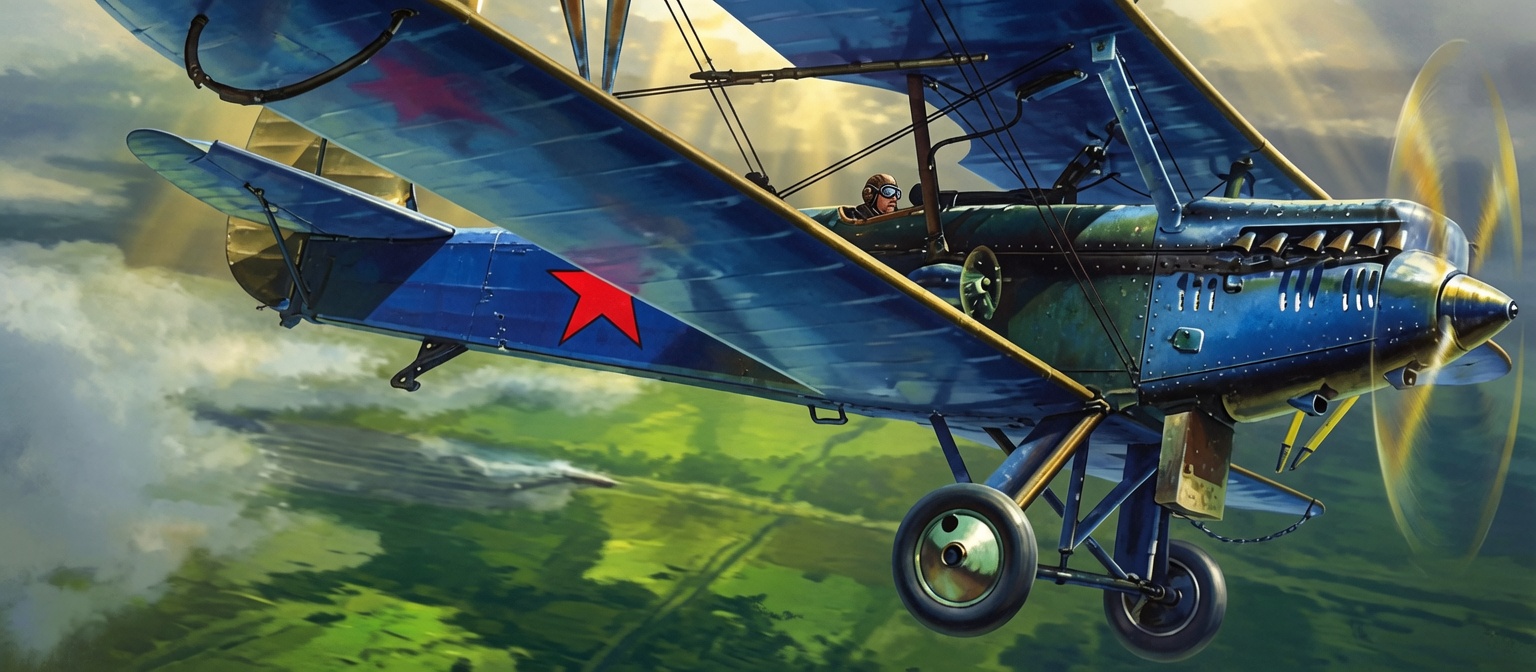
In 1912, during the height of fighting in the Balkans, the familiar sounds of war — cannonade, rifle and machine-gun fire, and the neighing of horses — were joined by another: the drone of an aircraft engine. For the first time, an airplane appeared over the battlefield — still unarmed, but already capable of causing no small amount of trouble for the opposing side.
At the controls of the strut-and-wire "etageres," suitable only for pleasure flights over Khodynka Field, sat Russian volunteer pilots.
  Click to toggle image Click to toggle image |
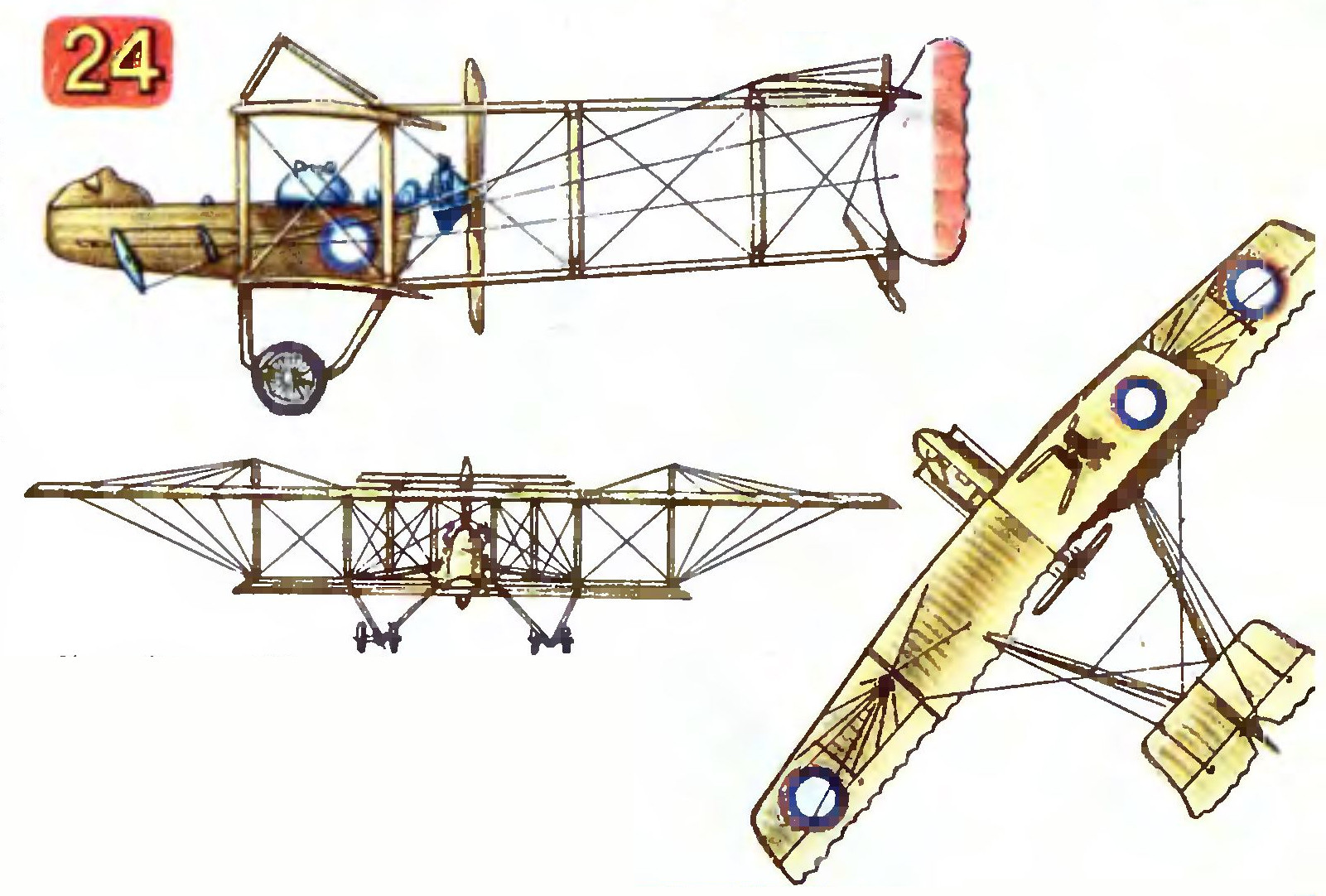
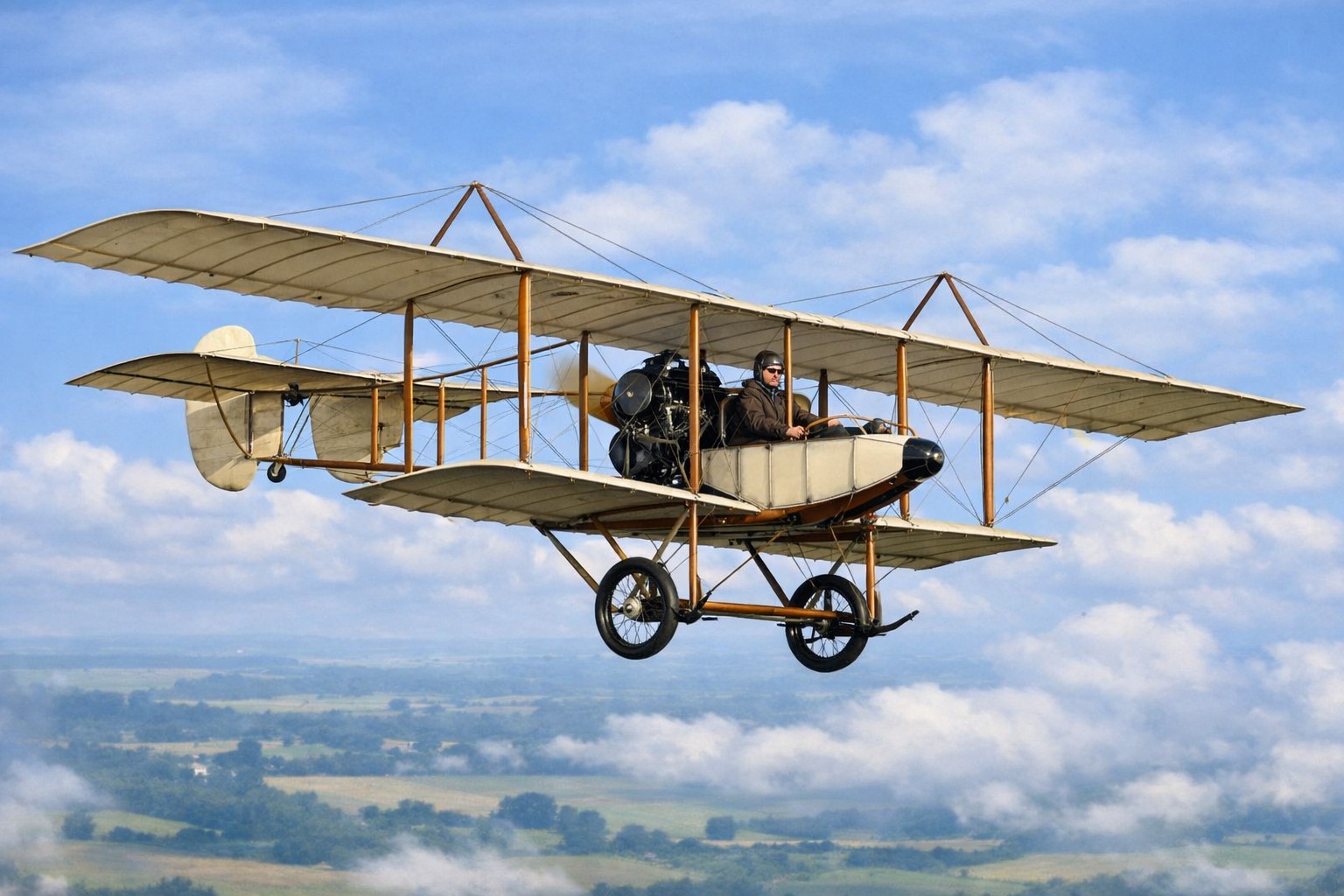
| Farman-XXII (France, 1914). Engine — "Gnome," 80 hp. Length — 8.9 m. Wingspan — 15.0 m (upper wing), 7.58 m (lower). Wing area — 41.0 m². Loaded weight — 680 kg. Empty weight — 430 kg. Maximum speed — 90 km/h. Flight duration — 3.5 h. Range — 300 km. From 1915, the aircraft was used as a trainer. |
Responding to the request of the Bulgarian government, our compatriots united into a volunteer detachment that came to the aid of their fellow Slavic people. On the initiative of S. Tsvetinov — one of the founders of the Russian Aeronautics Society — private pilots Yefimov, Agafonov, Yevsyukov, Kolchin, and Kostin formed one of the first combat aviation units in history. The first military "profession" of the airplane was reconnaissance.
The successful use of heavier-than-air aircraft for aerial reconnaissance and artillery spotting gave hope to military leaders. Forecasting the future of aviation, specialists wrote: "One battery with one airplane will be more effective in battle than three batteries without an airplane."
The world war that soon broke out immediately provided the airplane with a wide field of combat activity. Military service began for 244 aircraft bearing the identification markings of the Russian army: Nieuport-4, Farman-7, -15, and -16 machines, equipped with 70–80 hp Gnome engines. Original Russian designs also entered service.
 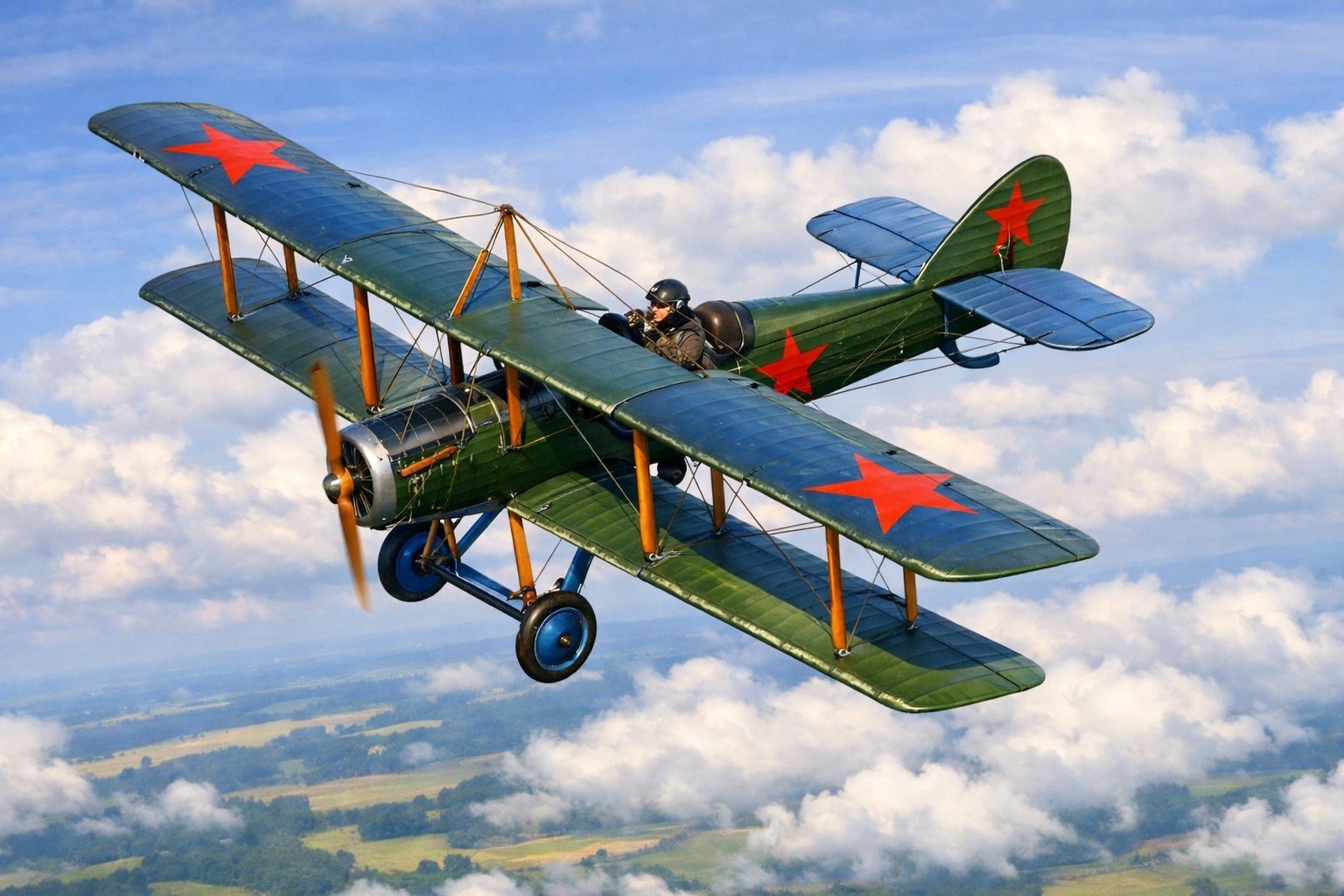 Click to toggle image Click to toggle image |
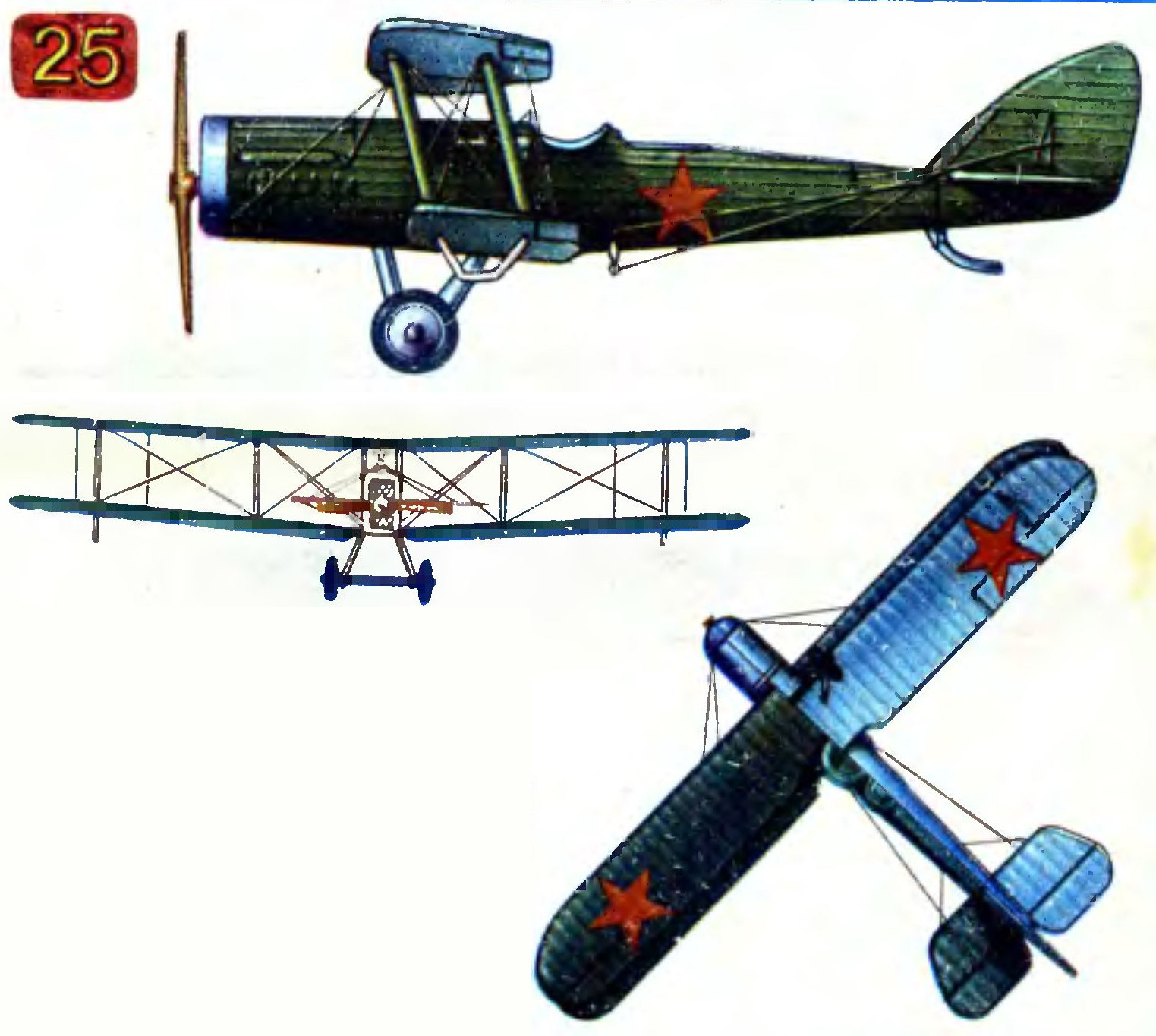
| R-1 (USSR, 1923). Engine — M-5, 400 hp. Length — 9.24 m. Wingspan — 14.02 m. Wing area — 44.54 m². Loaded weight — 2200 kg. Empty weight — 1450 kg. Maximum speed — 185 km/h. Service ceiling — 5000 m. Flight duration — 4 h. Range — 700 km. |
At first, the war was of a maneuverable nature, and cavalry, which penetrated hundreds of kilometers into enemy rear areas to gather intelligence, proved not to be a very effective source of information. While the dashing cavalrymen were cutting through enemy barriers and making their way back to their own lines, aviators managed to fly several sorties and describe in detail what they had seen in their reconnaissance reports. Over time, aviation began to supply data on the enemy not only to the front command but also to headquarters. Strategic reconnaissance deep in enemy rear areas was conducted by four-engine "Muromets" aircraft with a long range of action.
What they saw from a bird's-eye view, pilots transmitted using pennants — they would drop them over the positions of their own troops. Later, when cameras appeared on aircraft and photo-interpretation specialists appeared at headquarters, troops began receiving more objective information that allowed command to make the most important decisions directly affecting the course of the entire war. The historic Brusilov Offensive in the spring of 1916 was carried out by Russian troops fully armed with detailed reconnaissance data on enemy fortifications. Aviation photographed the enemy positions, and specialists, after projecting the photographs onto maps, gave artillery detailed target plans. In 1916, Russian pilots made aerial photographs of the enemy's forward positions stretching from the Black Sea to the Baltic Sea.
At first, the "eyes of the army" were general staff officers and unit commanders who took to the air together with professional pilots. As the war progressed, the ground officers were replaced by pilot-observers — graduates of special schools and courses... The aircraft themselves also improved. At the start of the war, the reconnaissance aircraft was a modified pre-war machine. The observer sat in front of the pilot, and sometimes squeezed into the narrow space between the pilot and the engine located behind, and would often write information in a notebook on the pilot's back.
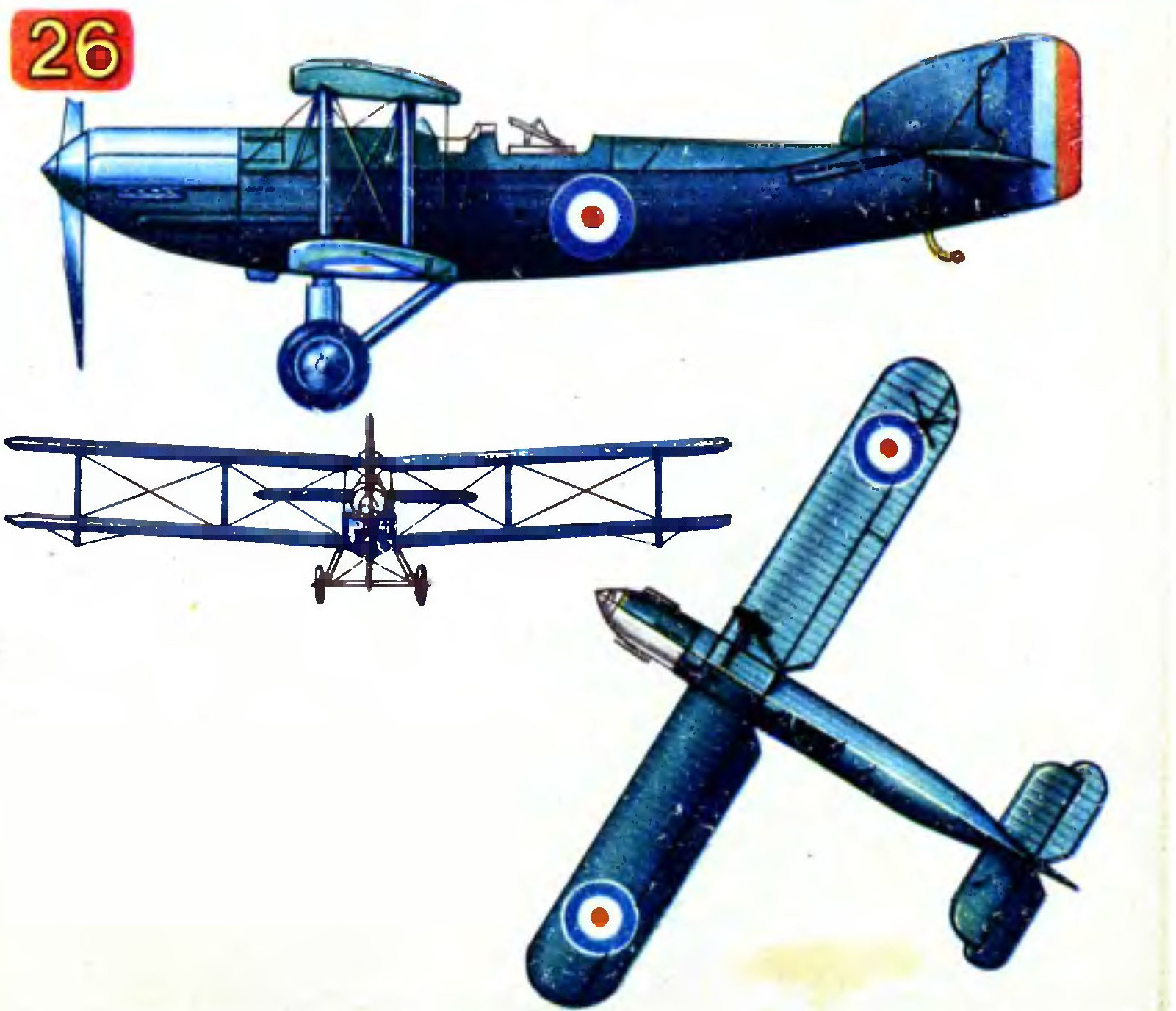 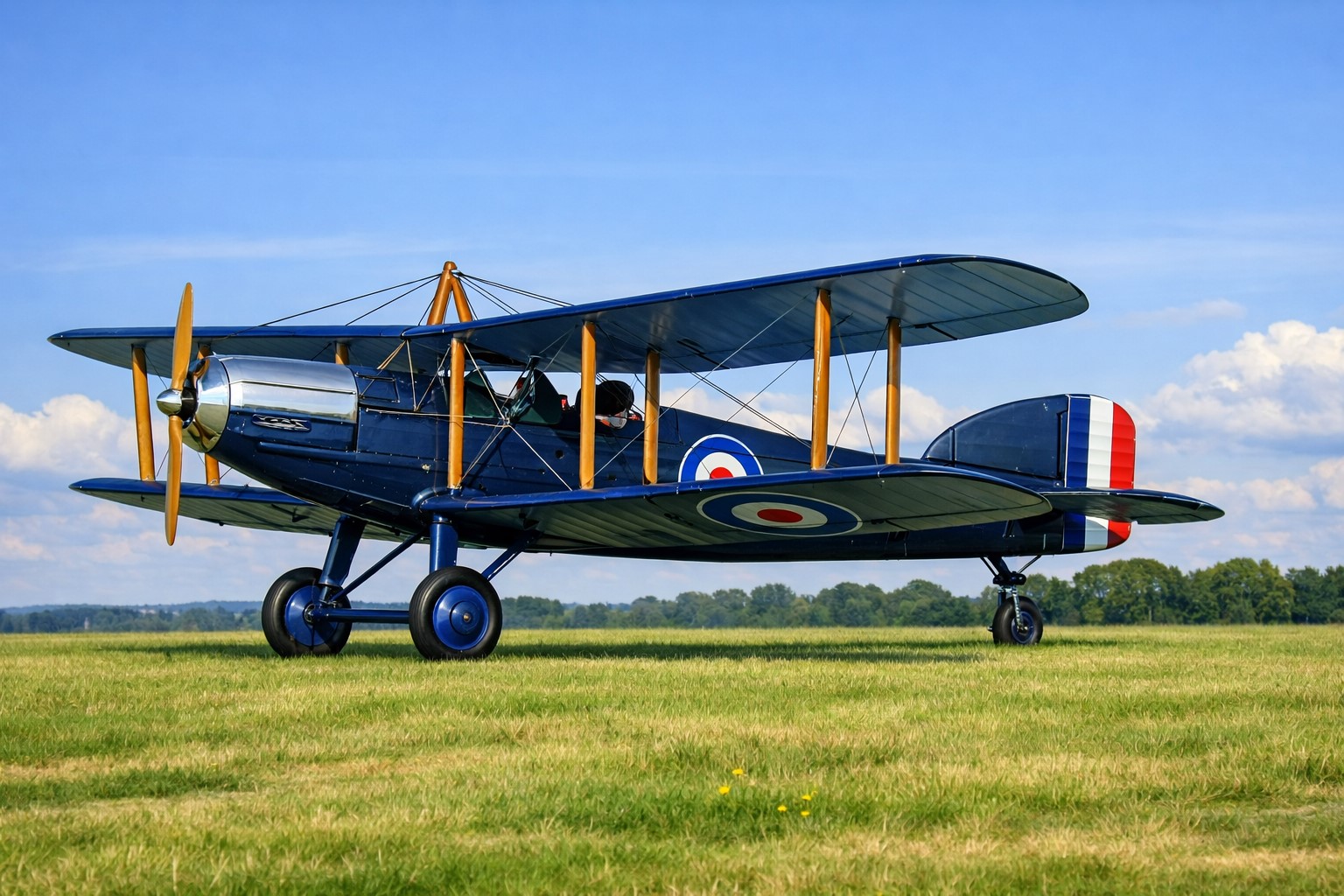 Click to toggle image Click to toggle image |
| Fairey IIIF (England, 1931). Engine — "Napier Lion," 530 hp. Length — 10.3 m. Wingspan — 13.9 m. Wing area — 40.7 m². Loaded weight — 2710 kg. Empty weight — 1765 kg. Maximum speed — 236 km/h. Service ceiling — 5360 m. Range — 640 km. |
The configuration with the engine located at the rear and a pusher propeller proved convenient for a specialized reconnaissance aircraft. After all, the main requirement for such a machine is good visibility, allowing the crew to see what is happening on the ground and to avoid a sudden attack from the air. Sitting in the nose section, resembling a boat with an engine at the stern, observers could examine enemy positions without hindrance. As good as the pusher-propeller configuration was, it had to be abandoned (though, on the arenas).
The design with a short, bulky fuselage and a truss tail boom was only good at low speeds. Aerodynamics forced designers to cover the trusses with skin and lengthen the fuselage itself. The only place left for the engine was the nose. The aircraft acquired the classic configuration, which was destined to dominate aircraft construction for many decades.
In 1917, the Russian aviation industry received drawings of the first reconnaissance aircraft by the English designer Geoffrey de Havilland, who later founded his own firm.
Based on the DH-9, N. Polikarpov created a modification of the R-1 aircraft with a Daimler engine, and then, in 1923, the R-1 with the Soviet M-5 engine. The aircraft was built from different materials, improving its flight performance. Full load, for example, amounted to 750 kg compared to 660 kg for the DH-9. By 1931, several thousand R-1s had been produced — the first Soviet reconnaissance aircraft built in large series. Under the piloting of M. Gromov, the machine took part in the Moscow — Beijing — Tokyo flight, demonstrating to the world the achievements of the young aviation industry of the Land of Soviets. The R-1 made many other long-distance flights.
Excellent examples of classic-configuration reconnaissance aircraft were produced by the English firm Fairey, founded in 1915 by Richard Fairey. Streamlined, "slicked-back" fuselage, good visibility, convenient controls — all this transformed the elegant biplane reconnaissance aircraft into a versatile long-range aircraft.
The domestic R-5 also distinguished itself with enviable versatility — a design that went down in the history of world aviation as a long-lived aircraft. Created by N. Polikarpov in 1929, this "flying" sesquiplane served until 1944. Some P-5 passenger aircraft, built on the basis of the reconnaissance aircraft, remained in service even after the Great Patriotic War. From 1931 to 1937, the R-5 was used in our Air Force as a reconnaissance aircraft, light bomber, ground-attack aircraft, torpedo bomber, artillery spotter...
In 1933, the R-5 won an international reconnaissance aircraft competition in Tehran. These machines also helped evacuate the Chelyuskin expedition crew from the ice floe.
Title page: R-5 (USSR, 1930). Engine — M-17B, 680 hp. Length — 10.56 m. Wingspan — 15.5 m. Wing area — 50.2 m². Loaded weight — 3247 kg. Empty weight — 1969 kg. Maximum speed — 230 km/h. Service ceiling — 6200 m. Flight duration — 4.5 h. Range — 800 km.